Have you ever put your eyes on a badge-like thing that is attached to a jacket, glued to a cap, or a school bag, which makes them look cool? That considerably can be an embroidered patch.
People like to display who they are, that is why they model patches. A patch can show the name of a team you are a member of, a job title that you occupy, a school badge, or a fun joke.
When it comes to patches, people are very much expected to ask what are embroidered patches? This guide answers that question.
You will learn what patches are made of, how they are stitched, and the best ways NZ shops, teams, and clubs use them every day.
you are a parent, an owner of a business, or Whether you are a leader of a club, this guide gives you confidence with everything needed to order.
What Are Embroidered Patches?
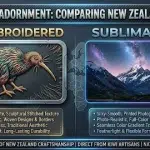
An embroidered patch is a tiny piece of fabric with a design embellished on it with the use of colourful thread. Instead of pen art, it is art that is made with a needle.
You can sew a patch on, stick it with Velcro, or iron it on. Each patch is soft, it can bend, and is tough at the same time.
What Materials Are Embroidered Patches Made From?
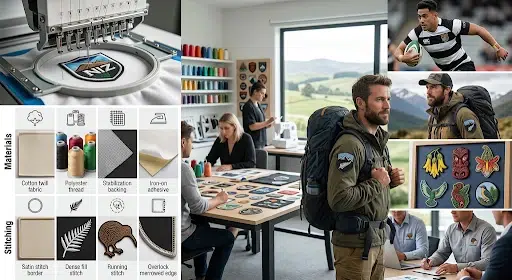
Good patch materials make it strong and long lasting. Here are the main parts of every embroidered patch.
| Material | What It Is | Why It Is Used |
|---|---|---|
| Twill fabric | A tight, woven cotton or polyester cloth | Strong base that holds thousands of stitches well |
| Felt | A soft, thick fabric with no weave | Gives a classic, bold look for badges |
| Polyester thread | A shiny, colourful thread | Bright colours that do not fade fast in the sun |
| Rayon thread | A soft, silky thread | Extra shine and a smooth, glossy finish |
| Backing material | Iron-on glue, fabric, or hook and loop | Helps the patch attach firmly to clothing or bags |
What Are Embroidered Patches NZ Businesses and Clubs Use Them For?
Across New Zealand, patches show up almost everywhere. Here are the most common groups that wear them.
Sports Clubs and Schools
Rugby, netball, and football teams wear custom sports patches to show their club badge. Schools use them on blazers and bags too.
Workplaces and Uniforms
Corporate places use custom uniform patches as their logos for staff wear and sew them to shirts and jackets to give a matching look so that the environment feels professional.
Motorcycle Clubs and Riders
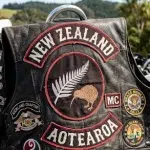
Riders wear patches on vests to show their club, rank, or crew. See styles built for riders at custom motorcycle patches.
Military, Police, and Emergency Groups
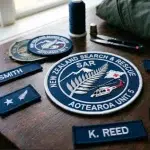
These groups use custom military patches and custom morale patches to show rank, unit, and duty. Strong stitching and sew-on backing are common here.
Hobby Groups and Fun Badges
Camping clubs, gaming groups, and hobby crews love collecting funny patches too or add a personal touch with custom name patches.
Embroidered Patch Backing Options
The backing is what holds the patch onto your clothes or bag. Picking the right one matters.
| Backing Type | How It Works | Best For |
|---|---|---|
| Iron-on | Heat melts glue on the back so it sticks | Quick home projects and light use |
| Sew-on | Thread stitches the patch in place by hand or machine | Long-lasting wear on uniforms and jackets |
| Velcro (hook and loop) | Two strips stick together and peel apart | Swapping patches often, like name badges |
| Self-adhesive | Peel off paper and press the patch down | Short-term or trial use |
Popular Patch Shapes and Sizes
Patches can be almost any shape you like. Round, square, shield, and die-cut outline shapes are all common choices.
Round and square shapes are the easiest and cheapest to make. Die-cut shapes follow the exact outline of your logo for a custom look.
Size depends on where the patch will go. A chest logo often sits between 2 and 3 inches wide.
A back patch, worn by riders or club members, is much bigger. It can be 8 inches or even larger.
Choosing Thread Colours for Your Patch
Thread colour makes a big difference in how a patch looks from far away. Bright colours stand out fastest.
Most patch makers use a standard thread colour chart. This helps match your logo colours as closely as possible.
Try to limit a design to a handful of thread colours. Small text can become hard to read after it is stitched if there are too many colours.
Metallic thread adds sparkle for special badges, like awards or anniversary patches. It costs a little more than regular thread.
Dark backgrounds make bright thread pop even more. Light backgrounds work better for bold, dark lettering.
Types of Stitching Used in Embroidered Patches
The stitch type changes how a patch looks and feels. Here are the main stitches used on custom patches.
| Stitch Type | What It Looks Like | Best For |
|---|---|---|
| Satin stitch | Smooth, shiny lines packed close together | Letters, small shapes, and fine text |
| Fill stitch | Flat blocks of solid colour | Big background areas and wide shapes |
| Tackle twill (appliqué) | A fabric piece sewn on with a bold border | Big letters and sports numbers |
| Running stitch | A thin outline stitch | Fine details and simple outlines |
| 3D or puff stitch | Raised, foam-filled stitching | Bold logos that stand up off the patch |
Common Mistakes to Avoid When Ordering Patches
- Choosing text that is too small, which can blur once stitched.
- Picking too many thread colours for a tiny design.
- Forgetting to decide on backing type before ordering.
- Skipping the digital proof step and missing small design errors.
- Not checking the final patch size against where it will actually be worn.
A quick review of your artwork before sewing starts can save time, money, and a second reorder.
Using Embroidered Patches for Brand Identity
A patch is a small but powerful branding tool. Staff wearing the same badge look professional and united.
Customers notice small details. A neat, well-stitched logo builds trust before a single word is spoken.
Patches also travel further than signs or business cards. A jacket badge gets seen anywhere a person goes.
Many cafes in NZ, businesses in trade, and gyms use matching patches across staff uniforms for a consistent look.
Adding a patch to caps, aprons, or bags extends a brand beyond just shirts, all with one design file.
Embroidered Patches vs Other Patch Types
Embroidered patches are not the only option. Here is how they compare to other popular styles.
| Patch Type | Look and Feel | Best For |
|---|---|---|
| Embroidered | Raised thread texture, classic look | Logos, badges, everyday uniforms |
| Woven | Flat, smooth surface with fine detail | Small text and detailed artwork |
| PVC (rubber) | Bendy, waterproof, bold colours | Outdoor gear and tactical wear |
| Chenille | Fluffy, raised letters | Varsity jackets and retro badges |
Each material also suits a different budget. Embroidered patches sit in the middle, more detailed than PVC but simpler than chenille.
How to Order Custom Embroidered Patches in NZ
Ordering custom patches does not need to be hard. Here is the simple path most buyers follow.
- Pick the shape that fits your design and whatever the size and style of the patch you need.
- Send your design idea to our team, even a rough sketch will do.
- Review a free digital proof before your logo goes into making.
- Choose your backing according to your needs.
- Approve the order and wait for your patches to arrive.
Planning Ahead: Timelines and Bulk Orders
If you need patches for an event, order early. Rush requests are possible but can limit design changes.
Bulk orders for a whole team or school usually get a lower price per patch than single, small orders.
It helps to confirm sizes for every uniform type before ordering, since jackets and caps may need different patch sizes.
Keep a copy of your final stitch file. Reordering later becomes much faster when the design is already saved.
How to Care for Your Embroidered Patches
Good care keeps a patch looking fresh for years. These easy tips help a lot.
- Wash on a gentle, cold cycle to protect the thread colours.
- Turn clothing inside out before washing so the patch is protected.
- Avoid high heat when ironing near a patch, as glue backing can melt too much.
- Sew the edges of iron-on patches for extra strength on items worn often.
- Air dry patches instead of using a hot tumble dryer when possible.
How Much Do Embroidered Patches Cost in NZ?
Patch prices change based on a few simple things. Bigger designs and busier stitching cost a bit more.
- Size: bigger patches use more thread and more time.
- Stitch count: designs with lots of detail take longer to sew.
- Quantity: ordering more patches usually lowers the price per piece.
- Backing type: velcro backing can cost slightly more than iron-on.
- Number of colours: more thread colours can add a small cost.
For exact numbers on your project, request a free quote and get pricing matched to your design.
Choosing a Patch Maker in New Zealand
Not every patch maker offers the same quality. A few simple checks can help you choose well.
- Ask to see sample photos of real, finished patches, not just design mockups.
- Check if a free digital proof is offered before production starts.
- Look for clear pricing based on size, quantity, and backing type.
- Confirm shipping times, especially if patches are needed for a set event date.
Frequently Asked Questions
What is the best backing for kids’ clothing?
Sew-on backing is a good choice because it holds the patch in place.
How long do embroidered patches last?
Patches can work for many years if they are of good quality and you take care of them, they stay new.
Do embroidered patches shrink in the wash?
Good patches do not shrink much. Use cold water and let them air dry.
What size should my patch be?
Small patches can be 2 to 3 inches. Big back patches can be 8 inches or more.
How long does it take to make custom embroidered patches?
At most, patches take about one week to be made, and sometimes two weeks.
Can embroidered patches be ironed on and sewn at the same time?
Yes! You can iron the patch on and sew around it for extra hold.
What is the difference between embroidered and printed patches?
Designs of embroidered patches are made with the use of thread, and printed patches use ink.
Your Next Step With Embroidered Patches
Now you know what are embroidered patches, what they are made of, and how they are stitched together. You also know the best uses across NZ, from sports teams to riders to workplaces and schools. Ready to design your own badge? Reach out to the Embroidery Patch NZ team and bring your idea to life.