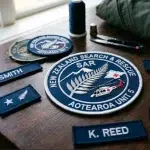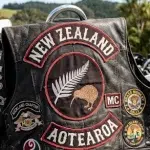
Custom PVC patches are flexible, rubber-like emblems moulded from polyvinyl chloride (PVC) plastic. Unlike embroidered patches, which are stitched from thread, PVC patches are poured and cured in a mould, making them completely waterproof, UV-resistant, and easy to clean. They come in flat (2D), raised (3D), glow-in-the-dark, transparent, and subdued (low-visibility) versions.
Custom PVC patches in NZ are widely used for military and tactical gear, outdoor uniforms, police identification, morale patches, sports equipment, and workwear. They accept any backing: velcro, iron-on, sew-on, magnetic, adhesive, or pin. Minimum order at Embroidery Patch NZ is just 10 pieces, with free design service and free digital mockup included.
What Are Custom PVC Patches?
Custom PVC patches, short for polyvinyl chloride patches, are flexible, rubber-like emblems manufactured through a moulding process rather than stitching or printing. The design is created by pouring liquid PVC compound into a precision-machined mould, then curing it under heat and pressure. The result is a dimensionally stable, fully waterproof, colour-fast emblem that holds its shape and finish through conditions that would degrade embroidered, woven, or printed alternatives.
In everyday usage, you’ll hear custom PVC patches called by several names:
- PVC rubber patches — referring to the flexible, rubber-like material feel
- PVC custom patches or PVC patches custom, the same product described differently
- Rubber patches — a common shorthand used in the outdoor and tactical communities
- Soft PVC patches — distinguishing the flexible moulded PVC from rigid plastic labels
- Tactical patches — when used in the military, airsoft, and law enforcement contexts
What makes custom PVC patches genuinely different from every other patch type is the combination of properties baked into the PVC material itself. The colour pigment lives inside the PVC compound, not on the surface, meaning it cannot fade, crack, peel, or wash out.
The moulded surface is completely sealed, so water, mud, grime, and fuel simply wipe clean. And because the material is inherently flexible, PVC patches conform to curved surfaces, hat brims, vest panels, backpack faces, without cracking or stiffening.
If you need a patch that survives New Zealand’s outdoors, its uniform washing cycles, and its UV summers without looking worn within a season, custom PVC patches are the right choice.
How Are Custom PVC Patches Made?
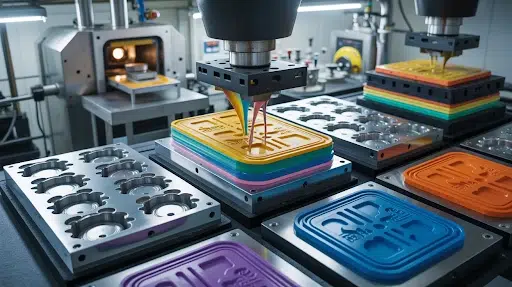
Understanding the manufacturing process helps you make better design decisions and set realistic expectations for what’s achievable in PVC.
Step 1 — Artwork Preparation
Your design is converted into a production file with separated colour layers. Each colour in your design becomes its own layer in the mould. Complex gradients, photographic shading, and hairline details behave differently in PVC than in print or embroidery, so the artwork team at Embroidery Patch NZ adapts your design during this stage to maximise the clarity and visual impact of the final moulded patch.
Step 2 — Mould Creation
A precision mould is machined from aluminium or steel based on your finalised artwork. The mould captures every raised edge, recessed detail, and colour boundary in your design. For 3D PVC patches, the mould is machined with multiple depth levels, creating the raised relief that gives 3D PVC patches their characteristic depth.
Step 3 — PVC Compound Mixing and Pouring
Liquid PVC compound is mixed with colour pigment to match your specified colours (Pantone matching is available). The coloured PVC is poured into the mould cavities in sequence, each colour filled separately and allowed to partially cure before the next is poured. This layering is what creates the crisp, clean colour boundaries visible in the finished patch.
Step 4 — Curing
The filled mould is placed in a curing oven at a controlled temperature and pressure. The PVC compounds bond and solidify into a single, integrated unit. The curing process determines the patch’s final flexibility, surface hardness, and durability.
Step 5 — Demolding and Finishing
Once cured, the patch is released from the mould and inspected. Edges are trimmed or die-cut to the final shape. Backing (velcro, iron-on, adhesive, etc.) is attached. The finished patch is quality-checked against the approved digital mockup.
What Designs Work Best in PVC?
| Design Feature | PVC Suitability | Notes |
| Bold, flat colour fills | Excellent | Crisp, clean, saturated results |
| Raised 3D elements | Excellent | Native to the PVC moulding process |
| Fine line detail | Very Good | Minimum recommended line width ~0.8mm |
| Small text | Good | Minimum recommended text height ~4mm |
| Gradients and blends | Limited | Best approximated with stepped colour layers |
| Photographic realism | Limited | Better achieved with sublimated patches |
| Intricate threadwork texture | Not applicable | Choose embroidered for this look |
For photographic and full-colour gradient designs, our custom sublimated patches are a better fit. For traditional textile-feel badges, our custom embroidered patches are the classic choice.
Types of Custom PVC Patches
Not all custom PVC patches are the same. The material platform supports several distinct product types, each with different visual effects and applications.
1. Flat (2D) Custom PVC Patches
The standard, most popular option. All design elements sit on a single surface plane, with colour differentiated by the PVC compound layer rather than by raised relief. Flat PVC patches deliver crisp, bold, graphic-style results, ideal for logos, wordmarks, shield shapes, and flag designs.
- Visual effect: Clean, graphic, bold colours
- Best for: Branding, uniform patches, bag patches, workwear logo patches, flag patches
- Thickness: Typically 3–4mm overall
2. Custom 3D PVC Patches (Raised Relief)
3D PVC patches are moulded with multiple surface levels, key design elements are raised above the background, creating a sculptural, relief-map effect. This adds significant visual impact and tactile interest, making logos and emblems jump off the surface they’re applied to.
- Visual effect: Dimensional, sculptural, high-impact
- Best for: Premium branding, tactical morale patches, logo patches for caps, military unit insignia, award patches
- Thickness: Typically 4–6mm at the highest raised point
3. Glow-in-the-Dark PVC Patches
A specialised PVC compound containing phosphorescent pigment is used for selected design elements or the entire patch face. After exposure to light, the glow elements emit visible light in the dark for several hours. Particularly popular in the tactical, airsoft, and outdoor communities.
- Visual effect: Standard appearance in daylight; glowing elements at night
- Best for: Tactical gear, airsoft / milsim, emergency kit identification, novelty and fun patches
- Important: Glow elements are typically a single colour (green or blue-white); multi-colour glow requires separate panels
4. Transparent / Silicone PVC Patches
A clear or translucent PVC compound is used, making the patch background invisible and allowing the garment colour beneath to show through. The design elements (lettering, logos) appear to float directly on the fabric surface. These are technically produced from a silicone-blend compound and require no background fill.
- Visual effect: Minimal, floating-logo aesthetic; garment colour shows through
- Best for: Fashion brands, minimalist corporate uniforms, premium lifestyle apparel
- Important: Works best on garments where a matching background colour cannot be achieved; clean, minimalist designs read best
5. Subdued / Low-Visibility PVC Patches (Tactical / Military)
Subdued PVC patches use muted, low-contrast colour palettes, typically olive drab, khaki, coyote brown, and black, designed for operational environments where the full-colour version of an insignia would compromise concealment. NZDF and allied force personnel commonly use subdued versions of unit patches and rank insignia alongside their full-colour equivalents.
- Visual effect: Muted, low-contrast, field-compatible colouring
- Best for: Military operations, tactical vest insignia, law enforcement field operations
- IR-reflective versions: Available for specific operational requirements, patches that are invisible under normal light but visible under night-vision equipment
6. Die-Cut Custom Shape PVC Patches
While many patches are produced in standard geometric shapes (rectangle, circle, shield), die-cut PVC patches are manufactured to any custom outline shape, matching the outer perimeter of your design exactly. A skull patch is cut to the skull outline. A kiwi-bird patch is cut to the kiwi silhouette. Die-cutting gives PVC patches a finished, professional look that standard-edge patches cannot match.
- Visual effect: Clean silhouette; patch shape reinforces the design
- Best for: Morale patches, character/mascot patches, flag patches, custom logo shapes
Quick Reference: PVC Patch Type Comparison
| PVC Patch Type | Key Feature | Best Application | Relative Cost |
| Flat (2D) | Single surface level | Branding, uniforms, logo patches | Base price |
| 3D Raised | Multi-level relief surface | Premium patches, caps, tactical | +15–25% |
| Glow-in-the-Dark | Phosphorescent elements | Tactical, novelty, outdoor | +10–20% |
| Transparent / Silicone | Clear/no background | Fashion, minimalist branding | +10–15% |
| Subdued / Low-Vis | Muted operational colours | Military, law enforcement field | Standard |
| Die-Cut Custom Shape | Exact-outline cut | Morale patches, character designs | +5–10% |
Custom PVC Patches vs Embroidered Patches — Which Is Better?
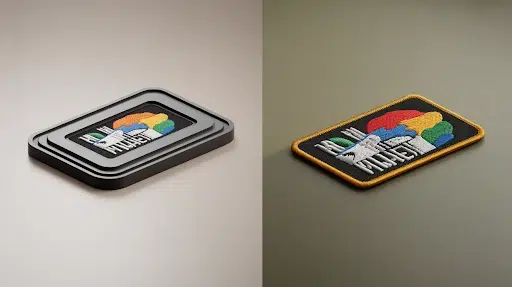
This is the most common question buyers ask when choosing between PVC and embroidered. There’s no universally correct answer, the right choice depends on your specific use case, aesthetic preference, and the conditions the patch will face.
When Custom PVC Patches Win
Outdoor and harsh environments:
PVC patches are 100% waterproof. Embroidered patches absorb moisture, which can lead to mildew, thread degradation, and colour bleeding in prolonged wet conditions. For gear that regularly encounters rain, mud, saltwater, or river crossings, PVC is the clear choice.
Easy cleaning:
PVC patch surfaces wipe clean with a damp cloth or a quick rinse. Embroidered patches can trap dirt and debris in the thread pile. For workwear, tactical vests, and outdoor gear, this is a practical advantage over a full season of use.
Fine graphic detail:
PVC moulding can capture sharp lines, bold fills, and graphic logos with perfect, crisp edges. Embroidery produces results that look best with simplified, high-contrast artwork, intricate details can lose definition at small sizes.
3D sculptural effects:
PVC naturally produces raised relief effects through mould depth variation. Embroidery can create a “puff” 3D effect (see Custom 3D Embroidery Patches), but PVC delivers more dramatic depth with sharper edges.
Longevity:
A quality PVC patch maintains its appearance for 5–10+ years. Embroidered patches eventually show thread wear, fraying, and colour fading, particularly at the edges and on raised elements.
When Embroidered Patches Win
Traditional uniform aesthetic:
Embroidered patches have a specific textile look and feel, raised thread, fabric base, and woven character that many military, police, and club applications specifically require. When the look of stitched thread is part of the identity, there’s no PVC equivalent.
Formal and dress uniform applications:
Ceremonial and dress uniforms typically mandate embroidered insignia. PVC is generally reserved for field and operational wear.
Cost at very high volumes:
For extremely large orders (1,000+ pieces) of simple designs, embroidery can be marginally less expensive than PVC per unit due to mould setup amortisation.
Soft fabric feel:
Some applications, such as children’s uniforms, fashion garments, and delicate fabric, benefit from the softer, textile feel of an embroidered patch over a rigid PVC rubber element.
Side-by-Side Comparison Table
| Factor | Custom PVC Patches | Custom Embroidered Patches |
| Waterproof | Fully waterproof | Water-resistant only |
| Cleanability | Wipe clean | Can trap debris |
| Durability (10yr) | Colour-stable, crack-resistant | Thread wear/fading possible |
| 3D / relief effects | Deep, sharp relief | Puff effect only |
| Fine graphic detail | Excellent | Limited to small sizes |
| Traditional textile look | Not textile | Classic thread look |
| Ceremonial / dress wear | Not standard | Industry standard |
| Flexibility on curves | Flexible PVC conforms | Stiffer on curves |
| Weight | Slightly heavier | Lighter |
Bottom line for NZ buyers: If your patches will face outdoor conditions, need to be waterproof, require crisp graphic logos, or will be used in tactical/field roles, choose custom PVC patches. If the traditional embroidered badge look is part of your identity or required by dress code, choose custom embroidered patches.
Custom PVC Patches vs Woven Patches vs Leather Patches
Beyond the PVC vs embroidery question, here’s how PVC compares to the other main patch types:
| Factor | PVC Patches | Woven Patches | Leather Patches |
| Material | Moulded PVC plastic | Woven polyester thread | Genuine or synthetic leather |
| Waterproof | Fully | Moderate | Good (treated leather) |
| Fine text/detail | Very good | Excellent | Moderate |
| 3D effects | Excellent | Flat only | Debossing only |
| Flexibility | Flexible | Very flexible | Moderate |
| Aesthetic | Graphic/tactical/bold | Clean/corporate / uniform | Rugged / premium/classic |
| Best for | Tactical, outdoor, field use | Name tapes, fine logos, uniforms | Motorcycle, fashion, premium branding |
| NZ service page | PVC Patches → | Woven Patches | Leather Patches |
Backing Options for Custom PVC Patches
One of the strengths of custom PVC patches is their compatibility with every standard patch backing. The PVC base provides a rigid, clean-surface foundation that bonds securely with adhesives, velcro, and attachment hardware.
Velcro / Hook-and-Loop Backing
The most requested backing for custom PVC patches in the tactical, military, outdoor, and sports contexts. A hook-side velcro panel is bonded to the back of the PVC patch, engaging with a loop panel on your garment or gear. PVC + velcro is the combination that dominates military uniform patches, tactical vest insignia, morale patches, and outdoor brand gear.
Iron-On / Heat Seal Backing
A thermoplastic adhesive sheet is bonded to the PVC patch back. When pressed with a household iron at 160°C for 20–30 seconds, the adhesive melts and bonds the patch to the garment fabric. Works best on cotton, poly-cotton, and denim. Not recommended for nylon, leather, or waterproof membranes.
Important note: When ironing PVC patches, use a pressing cloth between the iron and the patch face. Direct iron contact can warp or discolour the PVC surface at high temperatures.
Sew-On Backing
A plain textile backing is attached to the PVC patch, providing a surface that can be machine-stitched to any garment. Sew-on is the most durable attachment method for heavy-use applications. Commonly used for leather jacket back patches, heavy canvas workwear, and outdoor gear where iron-on adhesive won’t bond reliably.
Peel-and-Stick / Self-Adhesive
A pressure-sensitive adhesive (PSA) sheet is applied to the PVC patch back. The peel-and-stick backing is covered with a release liner. Peel away the liner and press the patch firmly onto a clean, smooth surface. Works well for smooth, hard surfaces: helmets, hard shell cases, laptop lids, vehicle panels. Not designed for long-term garment application.
Magnetic Backing
Full magnetic backing converts your PVC patch into a removable magnet. Suitable for thin fabrics where a magnet on the back side holds the patch from the front, avoiding any attachment to the fabric. Popular for fridge magnets, display collections, and thin fabric applications.
Safety Pin Backing
A standard safety pin is embedded or attached to the PVC patch back, allowing the patch to be pinned onto any fabric. Convenient for event-based use, temporary ID, and applications where fabric damage must be avoided.
No Backing
Best Custom Patches in New Zealand can be supplied with no backing at all, bare PVC reverse, for buyers who will apply their own adhesive, use the patch decoratively, or attach via their own hardware system. Also used for keychains and badge accessories.
Full Backing Option Summary
| Backing Type | Permanent? | Works On | Best For |
| Velcro (Hook + Loop) | No, removable | Any fabric with a loop panel | Tactical, military, outdoor, sports |
| Iron-On / Heat Seal | Yes | Cotton, poly-cotton, denim | Casual wear, school bags, fashion |
| Sew-On | Yes | All fabrics | Heavy-use, leather, outdoor gear |
| Peel & Stick | No, limited reuse | Smooth hard surfaces | Helmets, cases, promotional |
| Magnetic | No | Thin fabrics, metal | Display, thin fabrics |
| Safety Pin | No | All fabrics | Events, temporary ID |
| No Backing | N/A | Apply your own method | Custom applications, display |
Custom 3D PVC Patches — Everything You Need to Know
Custom 3D PVC patches deserve their own section because they represent the premium tier of PVC patch production, and the visual difference over flat PVC patches is striking.
What Makes a PVC Patch “3D”?
In 3D PVC patches, the mould is machined at multiple depth levels rather than a single surface plane. Key design elements, a central logo, a character figure, lettering, or specific graphic elements, are moulded at a raised height above the surrounding background. The result is a sculpted, relief-map appearance.
The depth range for 3D PVC patches is typically 1.5mm to 3mm of raised relief above the background layer, with overall patch thickness reaching 5–7mm at the highest points. This depth creates dramatic shadows and highlights that make the design visible from a distance and add tactile quality to the patch.
When Should You Choose 3D Over Flat PVC?
| Application | Flat PVC | 3D PVC | Best Choice |
| Cap/hat front patch | Good | Excellent, elevated logos pop on caps | 3D |
| Tactical vest morale patch | Good | Excellent, high visual impact | 3D |
| Military unit insignia | Standard | Premium adds distinction | 3D for dress, flat for field |
| Workwear logo patch | Good, clean and professional | Premium, if the brand demands attention | Context-dependent |
| Small name tape | Flat is cleaner for text | 3D can obscure small text | Flat |
| Character/mascot patch | Good | Excellent, dimensional characters are striking | 3D |
| Award/recognition patches | Good | Excellent, conveys premium quality | 3D |
Design Guidelines for Custom 3D PVC Patches
For optimal 3D PVC results:
- Keep raised elements bold: Fine lines and thin features in the raised layer can lose definition. Bold, solid shapes read better in raised relief than intricate linework.
- Use negative space: Recessed areas and backgrounds create the shadow contrast that makes raised elements pop. Designs with little depth variation lose the 3D effect.
- Text in raised relief: Text placed in the raised layer should be at least 5–6mm in height for legibility. Small text is better placed in the flat background layer.
- Reference the mould depth: When briefing the design, specify which elements you want raised (the highest layer), mid-level, and background. This guides the mould machining.
Custom PVC Velcro Patches — The Tactical Standard
The combination of custom PVC construction and velcro (hook-and-loop) backing is the most requested configuration for tactical, military, law enforcement, outdoor, and sports applications in New Zealand. It’s worth understanding why this specific combination dominates these sectors.
Why PVC + Velcro Is the Go-To Configuration
PVC for durability under field conditions: The patch face survives rain, mud, abrasion, UV exposure, and cleaning without colour loss or surface damage. In field conditions, whether that’s an NZDF deployment, a conservation project in Fiordland, or a weekend milsim event at Woodhill, the PVC surface simply wipes clean.
Velcro for operational flexibility: Hook-and-loop backing allows patches to be swapped between garments in seconds. A personnel member can move their name patch, rank insignia, and unit patch from a patrol jacket to a field vest to a plate carrier without tools or re-sewing. In environments where roles, assignments, and operational contexts change frequently, this flexibility is not a convenience, it’s a necessity.
Together: The PVC patch face keeps its appearance indefinitely. The velcro backing maintains grip through thousands of engagement cycles. For full-time field professionals, sports teams, and serious outdoor operators, custom PVC velcro patches are the only configuration that makes practical sense.
Custom PVC Velcro Patches in the NZ Milsim and Airsoft Community
New Zealand’s airsoft and milsim (military simulation) community has enthusiastically adopted custom PVC velcro patches as a core part of kit culture. Tactical vests, plate carriers, helmets, and packs in the milsim world are typically covered in loop-panel real estate specifically designed for velcro patch collection and display.
Custom PVC morale patches with velcro backing are the milsim patch format of choice, they survive the rough-and-tumble of CQB matches and outdoor scenarios, and they can be swapped between players, traded at events, or updated for different game factions.
Our custom morale patches are available in PVC with velcro backing, in both standard 2D and raised 3D versions.
Custom PVC Morale Patches
Morale patches are a cultural institution in military, law enforcement, and tactical communities worldwide, and New Zealand is no exception. They range from unit-identifying insignia to irreverent humour patches that build team spirit and camaraderie. Custom PVC is the morale patch material of choice for most active NZ communities, and here’s why:
Durability in use:
Morale patches live on tactical vests, plate carriers, helmets, and packs that see genuine field and training use. They get dirty. They get rained on. PVC survives this daily reality; fabric-based patches degrade.
Sharp, detailed design capability:
Morale patches often feature complex graphic elements, characters, skulls, animals, flags, symbols, and humorous references that require crisp line definition and bold colour saturation. PVC moulding delivers this with a precision that embroidery cannot match at morale patch scales.
Velcro standard:
The morale patch community is entirely built around Velcro compatibility. Every standard tactical vest has loop panels. Every milsim player expects hook-backed patches. PVC is produced with Velcro as the default backing for morale patches.
3D character:
The most sought-after morale patches are 3D, raised skulls, dimensional characters, and sculptural logos. Custom 3D PVC morale patches with velcro backing are the premium product of the category.
Popular Morale Patch Design Themes in the NZ Community
- NZ national identity: Silver fern, kiwi bird, All Blacks references, NZ flag elements, Māori design motifs
- Unit and team identity: Custom unit crests, team logos, and founding date patches
- Tactical humour: Irreverent, self-referential patches that circulate between team members and serve as collector items
- Operational themes: Mission-specific patches, location identifiers, operational deployment commemoration
- Subdued versions: Low-visibility versions of standard morale patches for genuine operational contexts
Custom PVC Police Patches & Law Enforcement Patches
New Zealand Police, customs officers, corrections staff, and private security professionals use patches to identify rank, role, division, and operational assignment. Custom PVC patches serve several specific functions in NZ law enforcement contexts.
PVC vs Embroidered for Police and Security Applications
Field / operational PVC patches: When NZ Police and security officers are in the field, particularly in high-activity roles, outdoor operations, or emergency callouts, PVC patches on tactical vests and plate carriers provide clear, durable identification that survives the operational environment.
Subdued PVC police patches: For firearms, tactical, and covert operations, subdued-colour PVC police patches reduce visual profile while maintaining unit and role identification.
Name and ID patches in PVC: While traditional woven name tapes remain standard on formal police uniforms, PVC name and ID patches on tactical and operational gear are increasingly adopted for their superior cleanability and durability.
Custom PVC security patches: Private security companies across New Zealand, from Auckland-based event security to South Island rural operations, use custom PVC logo patches on high-vis vests, body armour carriers, and outdoor jackets. The waterproof quality is particularly valuable for security teams working in wet conditions.
For bespoke law enforcement and police patch production, see: Custom Police Patches NZ
Custom PVC Patches for Hats
The custom PVC patch for hats market has grown significantly in New Zealand as structured caps with loop-panel front panels have become standard in outdoor, tactical, and corporate merchandise contexts.
Why PVC Patches Work So Well on Hats
The curve problem solved: A flat, rigid patch applied to the curved crown of a hat will buckle, peel at edges, and crack over time. PVC’s inherent flexibility allows it to conform to the curved hat front without creating stress at the edges. Even 3D PVC patches with their extra thickness maintain good surface contact on a structured cap panel.
Weatherproof for outdoor wear: Hats are constantly exposed to rain, sweat, UV, and physical contact. PVC patches maintain colour and surface integrity through this sustained exposure. Embroidered hat patches are susceptible to moisture, UV bleaching, and thread snags on brims and hat rims.
Clean, graphic logo look: Hat patches typically showcase brand logos, club crests, or wordmarks in a bold, clean graphic style, exactly what PVC moulding delivers best. The raised 3D effect is particularly impactful on hat patches, where the dimension is visible at a social distance.
Types of PVC Hat Patches
Flat 2D PVC hat patches: Clean, graphic, professional. Works best for corporate logos, wordmarks, and simple emblems.
Raised 3D PVC hat patches: The premium option. The raised relief makes logos stand out dramatically on cap crowns, a design that looks flat and ordinary in print becomes a tactile, dimensional statement piece on a hat.
Transparent/silicone PVC hat patches: For fashion-forward brands that want a floating logo look on a coloured hat without a contrasting patch background.
Custom shape PVC hat patches: Die-cut to the exact outline of your logo, no rectangular background border, just the pure shape of your design on the hat front.
For hats paired with custom uniform patches for branded staff kits across New Zealand, PVC is consistently the recommended combination.
Custom PVC Patches for Outdoor & Tactical Gear
New Zealand’s outdoor adventure culture, tramping, mountaineering, kayaking, and mountain biking, combined with an active defence and tactical community, creates consistent demand for outdoor and tactical custom PVC patches.
Outdoor Adventure and Guiding Companies
Outdoor guiding businesses, conservation organisations (DOC contractors, restoration trusts), and outdoor education providers across New Zealand use PVC patches to brand staff uniforms across conditions ranging from the Tongariro Alpine Crossing to the Marlborough Sounds. Rain, river crossings, UV, and abrasion are daily realities, PVC handles all of them.
Key applications:
- Staff jacket identification patches
- Pack cover branding patches
- Fleece and softshell logo patches
- Safety vest ID patches
For vehicle patches and motorcycle applications: Custom Motorcycle Patches NZ.
Tactical and Military Applications
NZDF personnel, military enthusiasts, and airsoft/milsim players represent a major portion of the NZ tactical PVC patch market. The MOLLE (Modular Lightweight Load-carrying Equipment) vest system used by defence forces, and replicated widely in the tactical and milsim communities, features extensive loop-panel real estate designed specifically for velcro PVC patch display.
Key applications:
- Unit insignia patches (PVC, subdued and full-colour)
- Rank identifier patches on patrol vests
- National flag patches (NZ, allied nations)
- Speciality team identification patches
- JTAC, EOD, and specialist role identifier patches
For NZDF-specific requirements and military patch specifications, see: Custom Military Patches NZ.
Who Uses Custom PVC Patches in New Zealand?
Custom PVC patches serve an extraordinarily broad range of NZ buyers. Here’s the full landscape:
| Sector | How They Use Custom PVC Patches |
| NZ Defence Force | Unit insignia, rank patches, national flag patches, specialist role ID, all in PVC with velcro for field interchangeability |
| NZ Police / Corrections | Tactical vest identification, operational role patches, subdued field patches |
| Private Security | Company logo patches on vests, role ID patches, and site-specific identification |
| Sports Clubs | Team crest patches on training jackets, bag patches, and kit identification |
| Outdoor Guiding / Tourism | Staff jacket branding, pack cover logos, safety identification |
| Milsim / Airsoft | Morale patches, unit identification, national flags, humour patches, all velcro |
| Motorcycle Clubs | Chapter identification patches, event patches on riding jackets |
| Schools / Universities | Club and society crests, sports team patches on bags and jackets |
| Corporate Workwear | Logo patches on staff uniforms, high-vis gear, and branded jackets |
| Emergency Services | FENZ, St John, SES identification patches for operational gear |
| Conservation / DOC Work | Organisation branding on field staff uniforms |
| Promotional / Merchandise | Brand awareness patches for product launches, events, and giveaways |
| Fashion / Streetwear | Transparent PVC patches, die-cut logos, and premium hat patches |
How to Design Custom PVC Patches
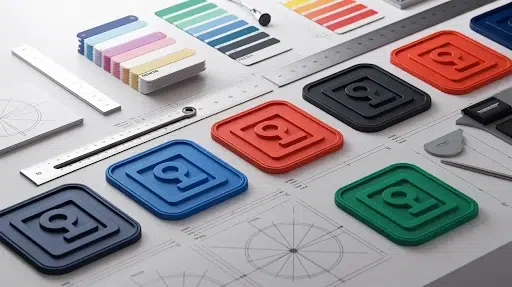
Designing for PVC is different from designing for embroidery or print. Here’s what you need to know to brief your PVC patch design effectively.
Design Rules for Custom PVC Patches
- Work in solid colours. PVC is a flat-fill medium. Each colour area is a separate PVC compound pour. Specify your colours as Pantone codes or provide a reference colour swatch. If you need to approximate a gradient, work with your design team to create stepped colour banding.
- Set minimum line widths. Any line in your design that will be a raised ridge or a recessed groove in the PVC should be at least 0.8mm wide. Finer lines can close up in the mould or appear indistinct in the finished patch.
- Set minimum text size. Legible text in a PVC patch should be at least 4mm tall for simple, clean letterforms. Serif fonts and script fonts need to be larger (6mm+) to maintain legibility in moulded PVC.
- Specify 2D vs 3D explicitly. Tell your design team which elements you want raised (and to what approximate height), which elements you want at mid-level, and which form the background. This information directly drives the mould machining specification.
- Consider border and edge finish. Will your patch have a die-cut edge (matching your design silhouette) or a standard geometric border (rectangle, circle, shield)? Die-cut edges add impact but slightly increase cost.
You Don’t Need a Production-Ready File
At Embroidery Patch NZ, our design team works with whatever you can provide, a rough sketch, a photo, a phone-captured image, or a written brief. The free artwork service includes converting your brief into production-ready files and producing a digital mockup before anything goes to mould. You approve the mockup; we produce the patches.
For design consultation and vector file preparation, our vector conversion service is also available separately.
Custom PVC Patch Sizing Guide
Standard patch sizes apply to PVC patches as they do to other types. Here are the most common sizes used across NZ applications:
| Standard Size | Dimensions | Common Application |
| Mini/name tape | 75mm × 20mm | Name tapes, subtitle patches |
| Small | 50mm × 50mm or 60mm × 40mm | Hat patches, small logo patches |
| Standard morale | 80mm × 50mm | Cap front panels, vest patches |
| Medium | 100mm × 75mm | Chest patches, bag logo patches |
| Large | 150mm × 100mm | Jacket chest panels, back patches |
| X-Large | 200mm × 150mm and above | Full back patches, large branding |
| Custom shape | Any dimensions | Die-cut patches, specific design outlines |
Sizing Tips Specific to PVC Patches
For hat patches: Standard hat front loop panels are 80mm × 50mm. Your PVC patch should be no larger than 78mm × 48mm to sit cleanly within the loop panel without overhanging edges.
For 3D PVC patches on hats: Raised 3D patches have additional thickness at the raised points. For curved hat crowns, keep 3D elements within the central 60–65% of the patch width to prevent edge-lift on the curve.
For tactical vest patches: Measure your specific loop field, vest panel sizes vary significantly across brands. Standard MOLLE vest front panels are typically 100mm × 80mm.
For morale patches: The NZ and international morale patch standard follows the US military’s standard of approximately 80mm × 50mm for the rectangular format, or a 75mm circle for round morale patches. These sizes fit virtually every tactical cap and vest loop panel.
Minimum practical PVC patch size: PVC mould precision allows patches as small as 25mm × 25mm, though very small patches have limited design detail capacity. For intricate small designs, woven patches may deliver cleaner results.
Custom PVC Patches Pricing in NZ
Custom PVC patches are mid-range in the custom patch pricing landscape, more expensive than basic embroidered patches due to mould costs, but the pricing becomes competitive quickly as quantities increase.
What Affects Custom PVC Patch Pricing?
| Pricing Factor | Lower Cost | Higher Cost |
| Quantity | Larger orders | Smaller orders (mould cost amortised) |
| Patch size | Smaller patches | Larger patches (more PVC compound) |
| Number of colours | Fewer colours | More colour layers |
| 2D vs 3D | Flat 2D patches | 3D raised relief patches |
| Edge finish | Standard die-cut | Complex custom silhouette |
| Backing type | Sew-on or no backing | Velcro, magnetic, or hardware |
| Special effects | Standard PVC | Glow-in-the-dark, transparent, IR-reflective |
The “No Minimum” Question
You’ll see some patch suppliers marketing “custom PVC patches no minimum.” At Embroidery Patch NZ, our minimum order is 10 pieces, one of the lowest genuine production minimums in the NZ market. Quantities below 10 are impractical to produce economically through the moulding process (mould costs require minimum amortisation), but 10 pieces are accessible for individuals, small clubs, startup brands, and sample orders.
How to Order Custom PVC Patches in NZ
Ordering from Embroidery Patch NZ is designed to be simple, regardless of how complete your design brief is.
The Ordering Process
Step 1 — Share your design brief
Submit your artwork, logo, sketch, or even a rough description through our quote form. If you have a vector file, great. If you have a JPG on your phone, that works too. Our design team handles the rest.
Step 2 — Specify your requirements
During the quote process, confirm:
- Patch dimensions (height × width in mm or cm)
- PVC type: flat 2D, 3D raised, glow-in-dark, transparent, subdued
- Backing: velcro (full hook + loop, or hook-only), iron-on, sew-on, adhesive, magnetic, pin, or none
- Quantity (minimum 10 pieces)
- Special colour requirements (Pantone references, subdued palette, NZ-specific colour matching)
Step 3 — Review your free digital mockup
Before any mould is machined, you receive a detailed digital mockup showing your patch design, colours, dimensions, and layout. Review it carefully. Request any changes, and we will revise until you’re completely satisfied. No charge for revisions. Your approval is required before we proceed.
Step 4 — Production and delivery
Standard turnaround: 7–10 business days from approved mockup. Urgent production available on request. Free shipping to all New Zealand regions, Auckland, Wellington, Christchurch, Hamilton, Tauranga, Dunedin, and everywhere in between.
Request your free quote and mockup
How to Care for and Clean Custom PVC Patches
One of the headline advantages of custom PVC patches is their maintenance simplicity. Here’s everything you need to know:
Routine Cleaning
PVC patches clean with a damp cloth or soft brush. For muddy patches (field use, outdoor work), rinse under cold or lukewarm water and wipe with a soft brush. The pigment is embedded in the PVC compound, not printed on the surface, cleaning cannot damage the colour.
Avoid: High-pressure water jets directed at the edge of the velcro backing, sustained high-pressure water at the seam between PVC and velcro can gradually weaken the adhesive bond.
Machine Washing
Custom PVC patches on garments are machine washable at 30°C–40°C on a gentle cycle. For velcro-backed patches, always close the velcro (press the hook side against the loop side or against itself) before placing the garment in the machine. Open velcro hooks in a wash cycle, grab onto and damage other garments.
Avoid: Washing at 60°C or above. At sustained high temperatures, PVC can soften and deform, particularly for 3D raised patches. Hot wash also accelerates adhesive breakdown on iron-on backed patches.
Drying
Air dry only for PVC patches on garments. Tumble dryer heat can soften and deform 3D PVC elements, and can accelerate Velcro adhesive breakdown. For iron-on backed PVC patches, tumble drying at high heat risks detachment.
Long-Term Storage
Store patches flat and out of direct UV sunlight for extended periods. While PVC is UV-stable under normal wear conditions, sustained concentrated UV (e.g., stored on a south-facing windowsill for months) can eventually cause minor surface discolouration on lighter-coloured PVC patches.
Velcro Maintenance for PVC Velcro Patches
The PVC face of a PVC velcro patch requires minimal maintenance. The velcro backing, however, requires care for Your Custom Velcro Patches with regular debris removal to maintain grip strength, particularly after outdoor use.
Frequently Asked Questions
What is a custom PVC patch?
A custom PVC patch is a flexible, rubber-like emblem made from moulded polyvinyl chloride (PVC), manufactured to your specific design, colours, shape, and backing requirements. Unlike embroidered patches, which are stitched from thread, PVC patches are poured into precision moulds and cured under heat. They are fully waterproof, UV-resistant, and colour-stable. In New Zealand, custom PVC patches are widely used for military uniforms, tactical gear, outdoor workwear, police and security identification, sports teams, morale patches, and corporate branding.
Are custom PVC patches waterproof?
Yes. Custom PVC patches are fully waterproof. The PVC compound is a sealed, non-absorbent material. The colour pigment is embedded inside the PVC rather than printed on the surface, so water cannot penetrate or damage the design. PVC patches can be washed, rained on, submerged, and dried repeatedly without colour loss or structural degradation.
What is the difference between 2D and 3D PVC patches?
A 2D (flat) PVC patch has all design elements on a single surface level, and colours are differentiated by the PVC compound layers, not by height. A 3D PVC patch has key design elements moulded at raised heights above the background, typically 1.5mm to 3mm of relief, creating a sculptural, dimensional effect. 3D patches have significantly more visual impact, particularly on caps, tactical vests, and applications where the patch is viewed at a social distance.
Can PVC patches be bent or flexed?
Yes. Standard PVC patches are flexible and can be bent without damage to the design or backing. This flexibility is one of PVC’s key advantages, it allows patches to conform to curved surfaces like hat crowns, vest panels, and bag faces without buckling or edge-lifting. Very thick 3D PVC patches (6mm+) have less flex than thin flat patches, but still significantly more than embroidered patches on stiff backing.
Can I wash custom PVC patches?
Yes. PVC patches are machine washable at 30°C–40°C on a gentle cycle. Avoid high-temperature washing (60°C+), which can soften and deform PVC, particularly 3D raised elements. Close all velcro panels before machine washing. Air dry, do not tumble dry at high heat.
How long do custom PVC patches last?
A quality custom PVC patch with proper care can maintain its appearance for 5–10+ years. The PVC material is inherently resistant to UV, moisture, abrasion, and colour fading under normal use conditions. The velcro backing on PVC velcro patches typically lasts 3–5 years of regular daily use before the loop panel may need replacement. The patch itself will outlast the Velcro considerably.
What backing options are available for custom PVC patches?
Custom PVC patches are available with: velcro (hook-and-loop, most popular for tactical/outdoor use), iron-on / heat seal, sew-on, peel-and-stick / self-adhesive, magnetic, safety pin, or no backing. The velcro backing, specifically hook-and-loop, is the standard for military, tactical, outdoor, and sports applications in NZ.
What is the minimum order for custom PVC patches in NZ?
At Embroidery Patch NZ, the minimum order for custom PVC patches is 10 pieces. This is one of the lowest genuine production minimums available for moulded PVC patches in New Zealand. Prices per patch decrease with higher quantities (50+, 100+, 500+).
How long does it take to get custom PVC patches in NZ?
Standard production and delivery turnaround from approved mockup is 7–10 business days to all New Zealand regions. Urgent production options are available for time-sensitive requirements. The quote and mockup approval process typically adds 1–3 business days before production begins, depending on design complexity and revision cycles.
Do custom PVC patches come with a free design service?
Yes. At Embroidery Patch NZ, free artwork design is included with every order. You don’t need to provide a production-ready file, a rough sketch, a photo, or a written brief is sufficient. Our team converts your brief into a production-ready design and provides a free digital mockup for your approval before production begins. Free revisions are included until you’re satisfied.
What are custom PVC morale patches?
Custom PVC morale patches are small, typically humorous, bold, or identity-based patches made from PVC with velcro backing. They are worn on tactical gear, vests, helmets, and bags in military, airsoft, milsim, and outdoor communities. The PVC construction makes them durable under field conditions, and the velcro backing allows them to be swapped and traded freely. In New Zealand, custom PVC morale patches featuring NZ national symbols (silver fern, kiwi), unit identifiers, and humorous designs are popular in both the NZDF and milsim communities.
Are custom PVC patches suitable for police and military use?
Yes. Custom PVC patches are widely used by NZ Police (tactical/operational gear), NZDF (field uniforms, tactical vests), private security, and defence-related organisations. For military applications, subdued-colour versions (muted olive drab/coyote / black palettes) are produced for field/operational use where full-colour insignia would compromise concealment. IR-reflective (infrared-compatible) versions are available for specific operational requirements.
What file format should I send for my PVC patch design?
Any format is accepted, we prefer vector files (AI, EPS, SVG) for the cleanest starting point, but we regularly work from JPG, PNG, PDF, and even hand-drawn sketches or photos. The free design service includes file conversion and preparation. If you have a logo used elsewhere (website, print), the same file works.
Can I order custom PVC patches for a hat?
Yes. Custom PVC patches for hats are one of our most popular configurations. Hat-specific patches should be sized to fit within the hat’s front loop panel (typically 78mm × 48mm for standard tactical/outdoor caps) and should be produced in flexible PVC to conform to the curved hat crown. Raised 3D PVC patches are particularly effective on hats, the dimensional effect is visible at a social distance.
What’s the difference between PVC patches and rubber patches?
None, they’re the same thing. “PVC patches” and “rubber patches” are interchangeable terms for the same moulded PVC product. The “rubber” name comes from the material’s rubber-like feel and flexibility. Technically, PVC (polyvinyl chloride) is a thermoplastic rather than a natural or synthetic rubber, but the term “rubber patch” is universally accepted in the industry.
Can I get custom PVC patches with NZ-specific designs?
Absolutely. Embroidery Patch NZ produces custom PVC patches with New Zealand national symbols, Māori design elements, NZ flag patches, NZDF unit insignia, and any New Zealand-specific design brief. We serve buyers from Auckland to Invercargill and understand the NZ identity-specific patch requirements across military, sports, outdoor, and community sectors.
Why Choose Embroidery Patch NZ for Custom PVC Patches?
New Zealand buyers have access to both local and offshore patch suppliers. Here’s what makes Embroidery Patch NZ the right choice for your custom PVC patches. We work with small clubs, individual buyers, startup brands, and large corporate orders equally. You don’t need a bulk order to access professional custom PVC patches.
Our in-house team turns your sketch, photo, or brief into a production-ready design file at no charge. A detailed digital preview of your patch is provided before any mould is machined.
You see exact dimensions, colours, and layout. We make changes until you’re happy. We don’t limit revision rounds. Your approval is required before production. No surprises. 7–10 business days standard. Urgent options available. Free delivery to all New Zealand regions. We know what works for NZ conditions and NZ customers.