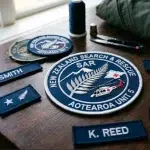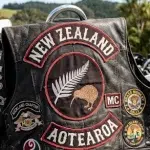
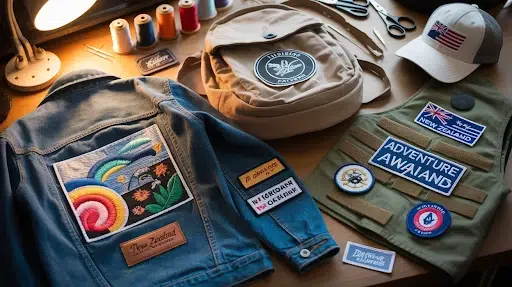
What Are Sew On Patches?
Sew on patches are embroidered, woven, or printed fabric embellishments that are permanently attached to garments, bags, hats, and accessories by stitching, either by hand or sewing machine. Unlike iron on patches (which use a heat-activated glue backing), sew on patches are threaded directly into the base fabric, creating a bond that genuinely lasts the lifetime of the garment.
In New Zealand, sew on patches have surged in popularity across fashion, sports clubs, motorcycle communities, school uniforms, corporate workwear, and personal customisation. From a patch on your Swanndri bush shirt to embroidered logos on a rugby club jacket, patches to sew on clothes have been a Kiwi staple for generations, and that tradition is stronger than ever.
At Embroidery Patch NZ, we design and produce custom sew on patches in New Zealand for individuals, businesses, clubs, and organisations, with fast nationwide delivery to Auckland, Wellington, Christchurch, Dunedin, Rotorua, and everywhere in between.
Types of Sew On Patches Available in NZ
Understanding the types of sew on patches helps you choose the right option for your project, budget, and garment:
1. Embroidered Sew On Patches
The gold standard. Sew on embroidered patches use machine embroidery thread stitched over a twill or felt base to create vibrant, textured, long-lasting designs. They’re thick, premium-looking, and perfect for jackets, vests, uniforms, and bags. Our custom embroidered patches are the most popular choice among NZ customers.
2. Woven Sew On Patches
Created on a loom (not stitched over a backing), woven patches achieve much finer detail. Ideal for logos with small lettering, detailed illustrations, or designs needing a flatter profile.
3. Printed Sew On Patches
Digitally printed onto fabric, these patches support photographic detail and unlimited colour options. Best for complex imagery that standard embroidery can’t replicate.
4. Chenille Sew On Patches
Plush and tactile, chenille (or “varsity”) patches are popular on sports jacket and school spirit wear while letterman jacket patches are also trendy across NZ secondary schools and universities.
5. Sew On Name Patches
Sew on name patches are widely used on NZ work uniforms, hospitality garments, healthcare scrubs, and sports team kits. Available in embroidered, woven, or printed formats.
6. Appliqué Sew On Patches
Sew on applique patches layer fabric cutouts to create dimensional, textured designs. Popular on children’s clothing, quilts, and decorative garments.
7. Reflective Sew On Patches
High-visibility reflective sew on patches are used on safety workwear, cycling gear, and outdoor apparel, particularly relevant in NZ’s outdoor recreation culture.
8. Leather & PVC Sew On Patches
Durable and weather-resistant, these patches are popular on biker vests, outdoor gear, and military-adjacent apparel. PVC patches handle New Zealand’s coastal and rain conditions particularly well.
9. Vintage & Retro Sew On Patches
Vintage sew on patches and retro sew on patches have become a major NZ fashion trend, with customers adding aged-look embroidered patches to denim, flannels, and canvas bags.
Sew On vs Iron On Patches: Which Is Better for NZ Conditions?
This is one of the most common questions we receive at Embroidery Patch NZ: “Are iron on or sew on patches better?” The short answer: for New Zealand conditions, sew on patches almost always win. Here’s a full comparison of iron on vs sew on patches:
| Feature | Sew On Patches | Iron On Patches |
| Durability | Excellent, lasts the garment’s lifetime | Moderate, adhesive weakens with washing |
| NZ Weather Resistance | Very high, not affected by humidity or rain | Moderate, humidity can compromise adhesive |
| Fabric Compatibility | Works on virtually all fabrics | Not suitable for nylon, leather, polyester, thick denim |
| Wash & Machine Wash | Fully machine washable | May peel after repeated machine washing |
| Application Method | Needle and thread (hand or machine) | Iron / heat press |
| Skill Required | Basic sewing ability | Beginner-friendly |
| Permanence | Permanent (can be removed with effort) | Semi-permanent |
| Best Use | Uniforms, leather, outdoor gear, jackets | Casual fashion, quick decoration |
| Professional Look | Superior | Good for casual use |
The verdict for NZ: Given New Zealand’s variable weather, love of outdoor activities, and culture of durable, practical clothing, sew on patches are the superior choice for anything that needs to last.
Pro Tip: You can also sew on iron on patches, many Embroidery Patch NZ customers iron their patches on first to secure placement, then hand-stitch the border for combined strength. This method is especially popular for patches on denim jackets and sports bags.
How to Sew On Patches by Hand (Step-by-Step)
Learning how to sew on patches by hand is a straightforward skill that takes about 30 minutes to master. Here’s a complete beginner-friendly guide:
What You’ll Need
- Your patch
- The garment you’re patching
- A sharp embroidery needle (or leather needle for leather garments)
- Thread, matching the patch border colour, or contrasting for a decorative effect
- Fabric pins or small clips
- Scissors
- A thimble (especially for denim or leather)
- Optional: fabric chalk or tailor’s pen for placement marking
Step 1: Plan Your Placement
Lay the garment flat on a firm surface. Position the patch where you’d like it and step back to assess from a distance. Take a photo with your phone as a reference, repositioning after sewing is difficult. Use pins to hold the patch in place.
Step 2: Thread and Knot Your Needle
Cut approximately 50–60cm of thread. Thread the needle, double the thread (pull both ends to the same length), and tie a firm knot at the end. Doubling the thread gives you twice the strength without any extra effort.
Step 3: Start from the Inside
Push the needle up through the garment fabric from the inside out, positioning it so it exits right at the edge of the patch. This hides your starting knot inside the garment.
Step 4: Choose Your Stitch, The Whip Stitch is Best for Beginners
Whip stitch (recommended for most patches):
- Push the needle down through both the patch and garment at the patch edge
- Pull the thread fully through
- Bring the needle back up over and around the patch edge, about 2–3mm from the previous stitch
- Repeat all the way around, keeping stitches even
Running stitch (low-profile option):
- Weave the needle in and out through both layers in a straight line along the patch edge
- Good for lightweight fabrics where you want minimal visibility
Backstitch (for maximum strength):
- After pulling the needle up, insert it back into the previous stitch hole
- Bring it up two stitch-lengths ahead
- Repeat, creates an unbroken line of stitching
Step 5: Work Your Way Around the Entire Patch
Continue stitching evenly around all four sides (or the full perimeter for shaped patches). Maintain consistent stitch spacing and tension. Don’t pull too tight or the fabric will pucker.
Step 6: Secure and Finish
When you arrive back at your starting point, create 2–3 small backstitches on the inside of the garment to lock the thread. Cut excess thread close to the knot.
Step 7: Press for a Clean Finish
Turn the garment inside out and press gently with an iron on an appropriate setting (check the garment’s care label). This smooths any minor puckering.
How to Sew On Patches with a Sewing Machine
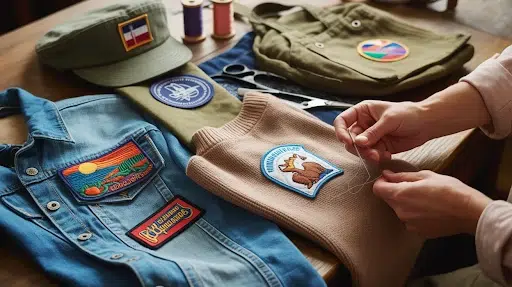
How to sew patches on a sewing machine is faster and often cleaner for those comfortable at the machine. Here’s how to do it properly:
Machine Settings for Patch Sewing
| Setting | Recommendation |
| Stitch type | Straight stitch (standard) or zigzag for a decorative edge |
| Stitch length | 2.5–3mm |
| Needle size | 80/12 universal; 90/14 for denim; 100/16 for heavy canvas |
| Thread | Polyester all-purpose, colour matched to patch border |
| Presser foot | Standard foot or open-toe embroidery foot |
| Machine speed | Slow, maximum control especially around curves |
Step-by-Step Machine Method
Step 1: Iron or pin the patch to the exact position. Many people use a small dot of fabric glue stick to temporarily hold the patch before machining.
Step 2: Set your machine to a straight stitch, stitch length 2.5–3mm.
Step 3: Begin sewing 1–2mm in from the patch edge. Sew slowly and steadily.
Step 4: At corners, stop with the needle in the down position, lift the presser foot, pivot the fabric 90°, lower the presser foot, and continue.
Step 5: When you return to the starting point, overlap by about 1cm and backstitch to lock.
Step 6: Pull thread tails to the inside and tie off or run a few hand backstitches to secure.
For hats: Machine-sewing patches on hats requires a free arm or cylinder arm. If your machine doesn’t have one, hand sewing is more practical for hat patches, see our hat patching section below.
How to Sew Patches on Different Fabrics
Different fabrics need different approaches. Here’s your complete NZ fabric guide:
How to Sew Patches on Denim
Denim is the most popular fabric for patches in NZ, from patches on jean jackets to decorative patches on jeans. Tips:
- Use a size 90/14 denim needle, it cuts through the weave without breaking
- Polyester or heavy-duty cotton thread works well
- For how to sew decorative patches on jeans, a contrasting thread colour (white, red, or yellow on dark denim) creates a popular “workwear” aesthetic
- Best way to sew patches on denim: Whip stitch or machine straight stitch both give great results
- For how to sew patches on jeans by hand, place a cutting board or magazine inside the jeans leg for a firm backing surface
- How to hand sew patches on jeans with a sewing machine: use a denim needle, reduce presser foot pressure slightly, and go slowly
How to Sew Patches on Leather
Leather is common in NZ’s motorcycle culture and equestrian community. The process differs significantly from fabric:
- Leather needle (wedge-tip) is essential, a standard needle will struggle
- Use waxed polyester or nylon thread, never use cotton thread on leather (it rots)
- Never use fabric pins, they leave permanent holes. Use binder clips or leather tape instead
- Pre-punch stitch holes with an awl or leather hole punch for perfectly even spacing
- Saddle stitch (two needles, one through each side simultaneously) is the professional method, incredibly strong
- Can you sew patches on leather? Yes, and it creates one of the most durable and striking patch applications possible
How to sew patches on a leather vest (by hand):
- Pre-punch holes around the patch perimeter with an awl, 3–4mm apart
- Use a long length of waxed thread and two needles
- Pass both needles through the first hole in opposite directions
- Continue to the next hole, always passing both needles through from opposite sides
- This creates the saddle stitch, strong enough to outlast the leather itself
How to sew patches on a leather motorcycle jacket by hand: The process is the same as above. Work on a firm flat surface, use a rubber mallet to gently set your stitches flush, and work in sections of 20–30 holes before pulling tight.
How to Sew Patches on Nylon
Can you sew patches on nylon? Yes, but nylon requires care:
- Use a sharp fine needle (70/10)
- Fine polyester thread, it won’t fray or break on nylon
- Sew slowly, nylon slips easily under the presser foot
- Backstitch at start and end to prevent unravelling
- If the nylon puckers, back the area with iron-on interfacing before sewing
How to Sew Patches on Polyester
Can you sew patches on polyester? Absolutely:
- Use a stretch or universal needle
- Skip the iron-on method, heat can damage or melt polyester fibres
- Hand whip stitch is perfectly suitable and avoids any machine tension issues
- Polyester thread is the best match for polyester garments
How to Sew Patches on Fabric (General)
How to sew patches on fabric in general, cotton, linen, canvas, wool:
- Standard universal needle and all-purpose polyester thread for most fabrics
- Canvas and heavy cotton respond well to machine stitching
- Wool and lightweight fabrics are best handled by hand to avoid machine distortion
- Always use a sharp needle, a blunt needle drags and damages fabric
How to Sew Patches on Different Items
How to Sew Patches on a Jacket
Jackets are the #1 patch destination in NZ, denim, leather, bomber, and work jackets all get patches here regularly.
- Plan your layout first, lay all patches on the jacket and photograph before committing
- Work from the centre outward for back patch arrangements
- Stuff the jacket with a pillow or rolled towel to create a firm working surface
- For how to sew patches on a jean jacket, use a denim needle and work section by section
- For how to sew patches on a leather jacket by hand, follow the leather method above
- For machine work, use the free arm if available for sleeves
How to Sew Patches on Jeans
For both decorative patches and repair patches:
- Insert a rolled magazine or small cutting board into the jeans leg
- Sew from the outside with the leg supported from inside
- How to sew patches on jeans with a sewing machine: Use a denim needle, reduce speed, pivot at corners
- How to sew knee patches on jeans: Position slightly above the knee (they migrate down with wear); use a heavy backstitch or machine zigzag for high-stress areas
- How to sew fabric patches on jeans: Same process, for fabric patches (as opposed to embroidered), turn the raw edges under 5mm and press before stitching
How to Sew Patches on a Backpack
How to sew patches on a backpack:
- Open all zippers and compartments to give access to the panel you’re patching
- Slide a small cutting board, hardback book, or piece of cardboard inside the compartment for a firm backing
- Hand sewing is often easier than machine for structured backpacks
- Use a heavy-duty needle and strong polyester thread
- Backstitch is recommended for bag patches, it’s the strongest hand stitch
How to Sew Patches on Hats
How to sew patches on ball caps and structured hats:
- Stuff the hat firmly with a rolled hand towel to create a firm curved backing
- Use a curved upholstery needle for structured caps, it follows the curve naturally
- Hand-sew with a tight whip stitch (every 2–3mm)
- For machine sewing: use a free arm or cylinder arm machine, or a hat hoop on an embroidery machine
- Companies that sew patches on hats (near you) include embroidery shops and uniform suppliers, search “sew patches on hats near me” on Google Maps
How to Sew Patches on a Shirt
For lightweight shirts, t-shirts, and polos:
- Back the shirt area with a piece of interfacing or place a piece of cardboard inside during sewing
- Use a fine needle (70/10 or 75/11) and lightweight polyester thread
- A running stitch or very fine whip stitch works best, don’t pull tight
- Machine setting: shorter stitch length (2mm) on lighter fabrics
How to Sew Patches on a Uniform Sleeve
How to sew patches on a uniform sleeve or how to sew patches on a uniform:
- Turn the sleeve inside out and insert a pressing ham or rolled towel
- Machine or hand sew with thread matching the uniform colour
- Follow official placement guidelines for your organisation, school, or branch
- Keep all stitches tight and even, inspection standards apply for official uniforms
How to Sew Patches on a Battle Jacket
How to sew patches on a battle jacket (a denim or leather jacket covered in band/pop culture patches):
- There are no rules, that’s the beauty of a battle jacket
- Start with the back centrepiece (if any), then work outward
- Mix patch sizes and shapes for visual interest
- Rock band sew on patches, star wars sew on patches, Marvel sew on patches, Harry Potter sew on patches, Disney sew on patches, all popular choices for battle jackets in NZ
- Leave 5–10mm between patches to allow clean sewing of each
How to Sew Patches on a Denim Jacket
How to hand sew patches on a denim jacket or by machine:
- Follow the same jacket method above
- Denim jackets are the most forgiving surface for patch work
- For a tidy back panel: chalk-mark the centre line, position your centrepiece patch, then work out
- How to sew patches on a denim jacket by machine: Set to 90/14 needle, 2.5mm stitch, medium speed
How to Sew Patches on Pants (with Sewing Machine)
How to sew patches on pants with a sewing machine:
- Insert support inside the pant leg (cutting board or folded cardboard)
- For uniform trousers, use thread matching the trouser colour exactly
- Stitch slowly around the patch perimeter, pivoting at corners
- For heavy denim trousers, a 100/16 needle and 3mm stitch length is appropriate
How to Sew Patches on Sleeves (with Sewing Machine)
How to sew patches on sleeves with a sewing machine:
- Stuff the sleeve firmly with a rolled towel
- Use the free arm of your machine if available
- Go slowly and use a stiletto or seam ripper to guide fabric under the needle
- Pivot with needle down at every corner
- A 2.5mm straight stitch gives a clean, professional result
Elbow Patches: A Kiwi Classic
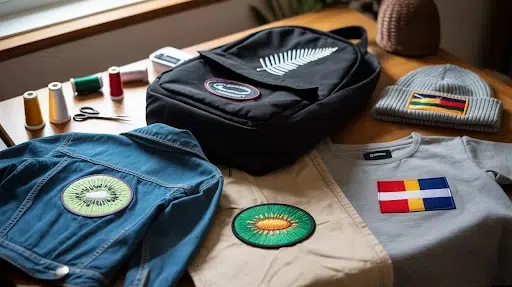
Elbow patches are a distinctly British and antipodean tradition, and they’re making a strong comeback across NZ. Worn on tweed blazers, wool jerseys, knit cardigans, and canvas work shirts, elbow patches are both decorative and practical.
How to Sew Elbow Patches on a Jacket
How to sew elbow patches on jacket:
- Try the jacket on and have someone mark the elbow centre point with chalk
- Remove the jacket and draw an oval or rectangle around the chalk mark, standard elbow patch size is roughly 12cm × 8cm
- Position your patch over the marked area and pin
- How to sew on elbow patches by hand: Whip stitch around the perimeter with a doubled thread in a matching colour
- For a classic look, use leather elbow patches, follow the leather method above
How to Sew Elbow Patches on a Sweater
How to sew elbow patches on a sweater:
- Knit fabric is stretchy and delicate, always hand sew, never machine
- Use a blunt tapestry needle (to avoid splitting yarn) and matching wool or polyester thread
- Use a whip stitch or slip stitch, both blend naturally with the sweater texture
- Pin generously before sewing and stretch the sweater to its natural shape while working
How to Sew Elbow Patches on a Blazer
How to sew elbow patches on a blazer:
- Most NZ blazers use wool-blend fabric, treat like a sweater for hand sewing
- For lined blazers, only stitch through the outer shell, not the lining
- Use a slip stitch for invisible attachment, or a decorative whip stitch for a feature look
- Leather elbow patches on a wool blazer are a classic NZ combination, use a leather needle and waxed thread
Uniform & Scout Patches: NZ Placement Guide
Scouts NZ and Youth Group Patches
How to sew on scout patches in New Zealand follows Scouts NZ guidelines:
- Keas, Cubs, Scouts, Venturers, and Rovers each have specific badge placement charts, always reference the official girls and boys scout patch placement guide for NZ uniform.
- How to sew on boy scout patches by hand: Use a whip stitch with thread matching the patch border colour; stitches should be 2–3mm apart
- How to sew on girl scout patches by hand: Same technique, use the placement chart, pin everything before sewing
- Thread: match the uniform colour (navy, khaki, or olive depending on section)
- Work on a flat surface with the garment fully supported
School Uniforms in NZ
Many NZ secondary schools require blazer patches or sports team patches. Tips:
- Use thread matching the school colours exactly
- Keep stitches small and neat, school patches are inspected
- For wool blazers, always hand sew to avoid machine damage to the fabric
- A slip stitch gives the cleanest finish on smooth blazer fabric
How to Sew Patches on a Uniform
How to sew patches on uniform, general NZ guide:
- Check your organisation’s uniform regulations for exact placement positions
- Use matching thread, mismatched thread on uniforms stands out
- Whip stitch is the most common and widely accepted method
- Ensure all patch edges lie flat against the uniform with no gaps or bubbles
- Press the garment before and after patch application for a professional finish
Military & Army Patches NZ
NZ Army and Defence Force Patches
Sew on army patches and NZ military sew on patches require precision:
- Always reference the NZDF (New Zealand Defence Force) uniform regulations for exact placement
- How to sew on army patches correctly: Use thread matching the uniform (typically disruptive pattern material (DPM) or olive/tan)
- How to sew patches on military uniform: First find a precise placement for military patches, then all four sides should be sewn, no open edges, stitches invisible from the front
- US Army sew on patches (for collectors or exchange programme participants) follow US Army AR 670-1
| Branch/Organisation | Thread Colour | Recommended Stitch | Fabric Type |
| NZDF Land Force | Olive/DPM match | Whip stitch | Cotton ripstop |
| NZDF Navy | Navy blue | Slip stitch | Wool/poly blend |
| NZDF Air Force | Air Force blue | Whip stitch | Cotton/poly blend |
| Scouts NZ | Match border | Whip stitch | Cotton twill |
| NZ Police | Dark navy | Whip stitch | Poly/wool blend |
| School Uniforms | Match school colours | Slip stitch | Wool/poly |
How to Sew Patches on Navy Dress Blues
How to sew patches on navy dress blues:
- Use dark navy thread, an exact colour match is essential for formal uniforms
- A slip stitch (also called invisible stitch) gives the cleanest, most professional look
- Keep stitches tiny (every 2mm) and even
- Press the uniform after sewing to ensure everything lies flat
Biker & Motorcycle Patches NZ
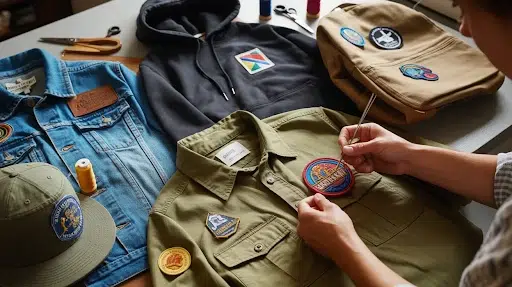
New Zealand’s motorcycle community has a strong patch placement culture of sew on biker patches and motorcycle sew on patches. Brands like Harley Davidson and Ducati have dedicated NZ chapters whose members wear patch-covered vests with pride.
Harley Davidson Sew On Patches NZ
Harley Davidson sew on patches are among the most sought-after patch types in NZ. They’re typically large back patches with chapter identification, and smaller rockers for city/region and membership status.
How to Sew Patches on a Leather Vest (Biker MC Style)
How to sew patches on leather vest by hand, the complete NZ biker guide:
- Plan the layout, MC back patches typically use a 3-piece arrangement (top rocker, centre patch, bottom rocker) or a single large centre patch
- Prepare the leather, clean the vest surface with a damp cloth and allow to dry fully
- Mark patch positions with chalk or tape, don’t use ballpoint pen on leather
- Pre-punch stitch holes with a leather awl or 4-in-1 pricking iron, 3–4mm spacing around the patch perimeter
- Saddle stitch with waxed nylon thread and two needles for maximum strength
- Front patches and rockers: Same technique, smaller scale
Ducati sew on patches and other brand patches: Same leather sewing process applies.
Looking for who can sew patches on leather near me in NZ? Search for leather goods repair shops, saddlers, and specialist embroidery shops. Embroidery Patch NZ can produce your custom MC patches ready to sew, with clean-cut borders for easy application.
Sew On Motorcycle Patches: AFL, Cycling & Sports
- AFL sew on patches NZ: AFL has grown significantly in NZ, team patches for jackets and bags are popular
- Cycling sew on patches: NZ’s cycling culture means club patches on jerseys, bags, and jackets are in high demand
- Reflective sew on patches are especially important for NZ cyclists and runners, high-vis patches on dark garments improve safety
Custom Sew On Patches NZ: Design Your Own
Whether you’re a business, sports club, motorcycle chapter, school, or individual, ordering custom sew on patches in NZ is easier than ever through Embroidery Patch NZ.
Why New Zealanders Order Custom Sew On Patches
- Club identity, rugby clubs, football clubs, cycling groups, motorcycle chapters
- School & university, sports teams, cultural groups, student clubs
- Business branding, logo patches on staff uniforms, workwear, merchandise
- Event memorabilia, marathons, rallies, festivals, reunions
- Personal fashion, unique wearable art that stands out
What to Consider When Ordering Custom Patches in NZ
- Size From tiny sew on name patches (25mm × 75mm) to large sew on patches and full back panels (300mm+). Larger patches allow finer detail.
- Shape Circle, shield, rectangle, die-cut custom shape. Die-cut patches follow your exact artwork outline.
- Embroidery Coverage
- 50% coverage, partial embroidery with visible backing
- 75% coverage, standard premium look
- 100% coverage, fully embroidered, no backing visible (highest quality)
- Border/Edge Type
- Merrowed border, overlocked raised edge, classic look
- Hot-cut border, heat-sealed edge for complex shapes
- Laser-cut border, ultra-precise for intricate outlines
- Backing Options
- Plain sew-on backing (twill or felt)
- Iron-on + sew-on (dual function)
- Velcro backing (tactical, interchangeable applications)
- Popular NZ Custom Patch Styles
| Style | Popular With |
| Club/team logo patches | Sports clubs, motorcycle chapters, school groups |
| Name patches | Workwear, uniforms, hospitality |
| AFL sew on patches | AFL NZ clubs |
| Cycling club patches | NZ cycling community |
| School badge patches | Secondary schools, universities |
| Kiwiana designs | Tourism, pride, gifting |
| Vintage/retro style | Fashion, denim culture |
| Reflective patches | Outdoor, safety, cycling |
How to Order Custom Sew On Patches from Embroidery Patch NZ
- Visit embroiderypatch.co.nz
- Upload your artwork or brief, our NZ design team will help if needed
- Choose size, shape, thread colours, border type, and backing
- Receive a free digital proof within 24 hours
- Approve and receive your patches, with fast NZ nationwide delivery
We serve customers in Auckland, Wellington, Christchurch, Dunedin, Rotorua, Hamilton, Tauranga, Napier, Palmerston North, Nelson and every other corner of New Zealand.
Our Custom Patch Range
| Product | Best For |
| Custom Embroidered Patches | Jackets, uniforms, hats, bags |
| Custom Iron On Patches | Quick application, casual wear |
| Custom Woven Patches | Fine detail logos, small text |
| Custom Name Patches | Workwear, uniforms, hospitality |
| Custom Chenille Patches | Sports jackets, school spirit |
| Custom PVC Patches | Outdoor gear, tactical, weather resistance |
| Wholesale / Bulk Patches | Clubs, schools, businesses, events |
Where to Buy Sew On Patches in NZ
If you’re searching “sew on patches NZ”, “custom designed embroidered patches“, “sew on patches Auckland”, “sew on patches Wellington”, or “where to buy sew on patches near me”, here are your best options:
1. Embroidery Patch NZ, Custom & Pre-Made Recommended
Your #1 source for custom sew on patches in New Zealand. We ship nationwide with fast turnaround times and no minimum order requirements.
2. Spotlight NZ
Sew on patches Spotlight, Spotlight stores across NZ carry a range of pre-made embroidered patches in their haberdashery sections. Great for standard designs and craft patches. Locations in Auckland, Wellington, Christchurch, and other main centres.
3. Online Marketplaces
Sew on patches Etsy and sew on patches Amazon NZ are popular for niche, novelty, and pre-made patches. Good for Disney sew on patches, Harry Potter sew on patches, Marvel sew on patches, Star Wars sew on patches, NASA sew on patches, rock band sew on patches, Harry Styles sew on patches, Minecraft sew on patches, Winnie the Pooh sew on patches, Jeep sew on patches, champion sew on patches, Nike sew on patches, Polo Ralph Lauren sew on patches, Ford sew on patches and other licensed designs. Delivery times vary for NZ customers.
4. Local Fabric & Haberdashery Stores
Local fabric stores in Auckland, Wellington, and Christchurch often carry basic sew on patches for clothes and clothing patches. Great for simple repair patches and fabric patches.
5. Tailors & Alteration Shops
If you need someone to sew patches onto a garment for you, especially leather or formal uniforms, a professional tailor is your best option. Search “who can sew on patches near me” or “do dry cleaners sew on patches” on Google Maps. Many NZ dry cleaners do offer this service for $5–$20 per patch.
6. Motorcycle & Biker Shops
For Harley Davidson sew on patches, Ducati patches, and general motorcycle sew on patches, NZ HD dealerships and independent motorcycle accessories shops often stock or can order patches.
Sew On Patches by NZ City
| City | Best Options |
| Sew on patches Auckland | Embroidery Patch NZ (online), Spotlight Sylvia Park/Albany/Manukau, local tailors |
| Sew on patches Wellington | Embroidery Patch NZ (online), Spotlight Wellington, CBD tailors |
| Sew on patches Christchurch | Embroidery Patch NZ (online), Spotlight Riccarton, local alterations |
| Sew on patches Dunedin | Embroidery Patch NZ (online, nationwide delivery), local fabric stores |
| Sew on patches Rotorua | Embroidery Patch NZ (online, nationwide delivery), local craft stores |
Best Stitches & Pro Tips for Perfect Patches
The Best Stitches to Sew On Patches
| Stitch | Best For | Skill Level | Strength |
| Whip Stitch | All fabrics, all patch types | Beginner | High |
| Running Stitch | Lightweight fabrics, discreet look | Beginner | Moderate |
| Backstitch | Maximum strength, bags, backpacks | Intermediate | Very High |
| Blanket Stitch | Decorative edge, artsy look | Intermediate | High |
| Saddle Stitch | Leather, biker vests, leather jackets | Advanced | Extremely High |
| Slip Stitch | Formal uniforms, blazers, invisible finish | Intermediate | Moderate-High |
| Machine Straight Stitch | Denim, canvas, fast and clean | Machine required | Very High |
| Machine Zigzag | Stretchy fabrics, decorative look | Machine required | High |
Pro Tips for Flawless Patch Application
- Always press the garment before applying patches, wrinkles cause placement errors
- Best way to sew on patches for beginners: Iron-on first (to hold placement), then hand-stitch the border for permanence
- Easy way to sew on patches: Use a fabric glue stick to tack the patch in place before sewing, saves fighting with pins
- For large sew on patches: Pin every 2–3cm around the perimeter to prevent any shifting during sewing
- Sew in good light, a daylight lamp reduces eye strain significantly when hand sewing
- Thread length: Never work with more than 60cm of thread at a time, it twists and tangles
- Tight, even stitches are more important than fast stitches, take your time
- How to make your own sew on patches: Cut fabric to shape, back with iron-on interfacing, finish edges with a zigzag stitch, decorate with embroidery or fabric paint. For professional quality, order from Embroidery Patch NZ
- DIY sew on patches for kids’ clothing: Use sew on patches for baby clothes with a gentle whip stitch and soft polyester thread, nothing sharp or rough against baby skin
- Do dry cleaners sew on patches? Many do, typically charging $5–$15 per patch. But for custom or large-scale patch work, a specialist embroidery shop is a better choice
Frequently Asked Questions
Can you sew on iron on patches?
Yes, you can sew iron on patches exactly like regular sew-on patches. Many NZ customers iron them on first for positioning, then stitch the border by hand for lasting durability. This is especially recommended for patches on jackets and bags that get heavy use.
Are iron on or sew on patches better?
For most applications in NZ, especially outdoor clothing, uniforms, and leather, sew on patches are better. They’re more durable, work on more fabric types, and won’t be affected by machine washing or NZ’s humid and wet conditions. Iron on patches are perfectly fine for casual fashion items that get light use.
What is the best stitch to sew on patches?
The whip stitch is the most beginner-friendly and widely used. The backstitch is the strongest. The saddle stitch is best for leather. On a sewing machine, a straight stitch 1–2mm from the patch edge gives a clean, professional result.
Can you sew patches on leather?
Yes. Use a leather needle, waxed polyester or nylon thread, pre-punch holes with an awl, and use a saddle stitch or whip stitch. Don’t use standard fabric pins, they leave permanent marks. The result is extremely durable and looks professional.
Can you sew patches on nylon?
Yes. Use a sharp fine needle (70/10), polyester thread, and sew slowly. Nylon is slippery, so use clips or a glue stick to hold the patch in place before sewing. Back with interfacing if the nylon is very lightweight.
Can you sew patches on polyester?
Yes. Use a universal or stretch needle and polyester thread. Avoid iron-on methods on polyester (heat risk). Hand sewing with a whip stitch works very well.
Where can I buy sew on patches in NZ?
Your best options are Embroidery Patch NZ for custom and quality patches (ships nationwide), Spotlight stores for pre-made craft patches, and Etsy or Amazon NZ for licensed character and brand patches. See the full Where to Buy section above.
Do Spotlight NZ stores sell sew on patches?
Yes, Spotlight sew on patches are available at Spotlight stores across NZ in their haberdashery/sewing notions sections. The range includes basic embroidered patches and some seasonal designs.
How to sew patches on jeans with a sewing machine?
Insert a cutting board or magazine inside the jeans leg. Use a 90/14 denim needle, 2.5–3mm stitch length, and sew 1–2mm in from the patch edge. Pivot at corners with the needle in the down position. Backstitch to start and finish.
How to sew elbow patches on a sweater?
Always hand sew sweater elbow patches, machine sewing risks distorting knit fabric. Use a blunt tapestry needle and matching wool or polyester thread. Whip stitch or slip stitch around the patch perimeter, keeping the sweater stretched to its natural shape while working.
How to sew patches on a leather motorcycle jacket by hand?
Use a leather needle, pre-punch holes with an awl, and saddle stitch with waxed nylon thread. Work on a flat surface. The saddle stitch is the strongest possible method for leather and will outlast the jacket itself.
How do you sew patches on a leather vest?
Pre-plan your layout, pre-punch stitch holes around the patch perimeter with an awl (3–4mm spacing), use waxed polyester or nylon thread, and saddle stitch using two needles, one through each hole from opposite sides. This creates an incredibly strong and durable bond.
How to sew on applique patches?
Position the applique patch and pin. Sew around the outer edge using a whip stitch or blanket stitch (blanket stitch gives a decorative finish). For machine application, use a narrow zigzag stitch around the perimeter, this secures all edges and prevents fraying.
How to sew on embroidered patches by hand?
Embroidered patches are fairly stiff and easy to hand-sew. Pin the patch in place, start from inside the garment, and use a whip stitch around the full perimeter spacing stitches 2–3mm apart. Use thread matching the patch’s border colour for the cleanest finish.
How to sew iron on patches on a sewing machine?
Set the machine to a straight stitch at 2.5–3mm. If the patch already has an iron-on backing, iron it to the garment first for stable positioning, this makes machine sewing much easier. Then the machine stitches 1–2mm inside the patch edge all the way around, backstitch to lock.
How to sew patches on a battle jacket?
There’s no right or wrong, it’s your creative canvas. Start with a centrepiece (if any) on the back, then fill in with smaller patches. Mix band patches, Star Wars patches, Marvel patches, Disney patches, Harry Potter patches and any other designs you love. Use a denim needle, stitch each patch individually, and leave a small gap between patches for sewing access.
How to make sew on patches at home?
Cut your chosen fabric to shape. Back with iron-on interfacing for stiffness. Finish the edges with a tight zigzag stitch or serger. Decorate with hand embroidery, fabric paint, or iron-on transfers.
How to sew patches on uniform, what thread to use?
Always use thread matching the uniform colour exactly. For most NZ school uniforms: navy, grey, or black thread. For military or NZDF uniforms: match the uniform fabric (olive, tan, or dark blue). For police: dark navy. Contrasting thread on formal uniforms is not appropriate.
Who can sew patches on leather near me in NZ?
Search Google Maps for leather repair shops, saddlers, and specialist alterations stores. In Auckland, Wellington, and Christchurch you’ll find leather goods shops and cobblers who offer this service. Alternatively, with the right needle and thread, it’s very doable at home, see our full leather guide above.
What to sew patches on, what items are most popular in NZ?
The most popular items for patches in NZ are: denim jackets, leather vests (motorcycle), work jackets, backpacks and school bags, hats and caps, jeans, school uniforms and sports uniforms, wool jerseys (elbow patches), canvas tote bags, and Swanndri/bush shirts.
Are wholesale sew on patches available from NZ suppliers?
Yes, Embroidery Patch NZ offers wholesale and bulk custom patches for clubs, schools, businesses, and events across New Zealand. Bulk pricing is available and delivery is to all NZ locations.
Do you offer sequin sew on patches?
Yes, sequin sew on patches are available for fashion, performance costumes, and decorative applications.
Are free sew on patches available anywhere?
Truly free sew on patches are rare commercially, but many NZ sports clubs, scout groups, and youth organisations distribute earned badges free to members.
Sew the Patch Your Way
Whether you’re patching a beloved denim jacket with retro sew on patches, completing your Scouts NZ uniform, outfitting your motorcycle club, customising your sports team’s gear, or adding a personal touch to everyday clothing, sew on patches are one of the most durable, versatile, and rewarding ways to personalise what you wear.
Ready to create something unique? The team at Embroidery Patch NZ is ready to help you design and produce custom embroidered sew on patches, with free design assistance, no minimum order, and delivery across all of New Zealand.